
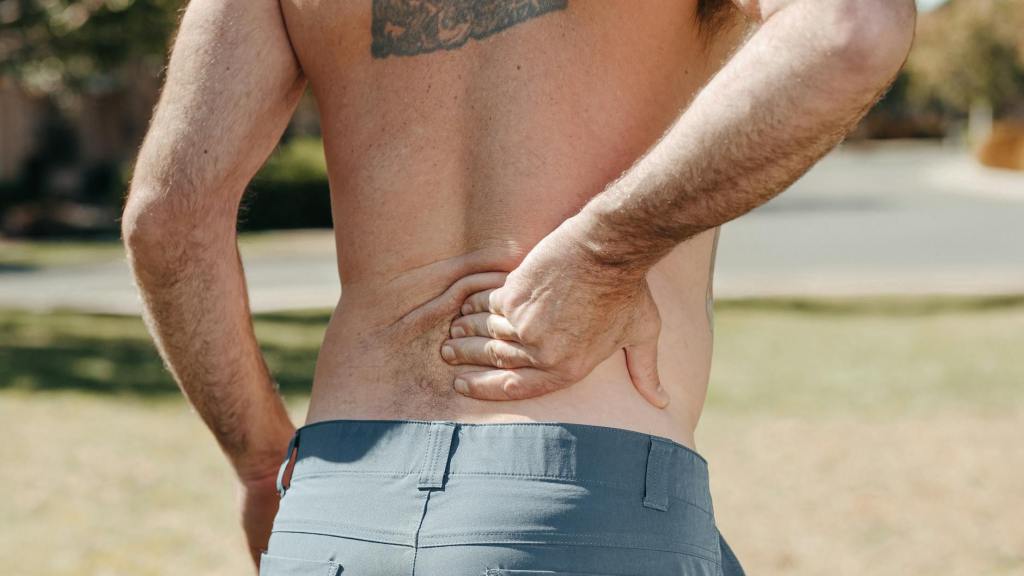
- Common symptoms associated with back pain
- The common causes of back pain
- Back pain in pregnancy
- Back pain when laying down
- Red flag associated with back pain
- How osteopathy can relieve back pain
- Exercise to manage back pain
Common symptoms associated with back pain
Back pain can present in various ways, and its symptoms often depend on the underlying cause. People often experience a localised or generalised pain somewhere in their back, which can be described as sharp, dull, or aching. This discomfort may be constant or may come and go, especially when moving or after prolonged periods of inactivity.
One frequent symptom associated with back pain is stiffness, that makes it difficult to bend or twist. This can limit mobility and make everyday tasks challenging. In some cases, back pain may radiate to other areas, such as the hips, buttocks, or legs, especially if a nerve is being compressed or irritated (as with sciatica). Radiating back pain may be accompanied by numbness, tingling, a “pins and needles” sensation or weakness in leg muscles often indicating nerve involvement.
Muscle spasms are another common symptom, causing sudden, intense pain and stiffness. These spasms can occur anywhere in the back, making movement difficult.
In more severe cases, back pain may be accompanied by changes in bowel or bladder function, unexplained weight loss, or fever, which may indicate an underlying infection or more serious condition such as spinal stenosis or cancer. If you are experiencing persistent, worsening, or unexplained back pain you should consult a health care professional.
The common causes of back pain
Back pain is a widespread issue that affects millions of people worldwide, and its causes can vary greatly. Some of the most common causes are arthritis, muscle strains, trauma to the back and disc herniations.
Muscle strains occur when a muscle is damaged. They can be caused by poor posture, heavy lifting, or sudden movements. These strains can result in and cause pain, stiffness and problems with everyday movements.
Another frequent cause is disc herniations, where the discs between the spinal vertebrae become damaged. This can lead to pressure on nerves and cause pain that may radiate down the legs or into other areas of the back.
Osteoarthritis is another common cause of back pain. This disease wears down and damages the cartilage in the spine that allow fluid motion which leads to inflammation, stiffness, and pain.
Traumatic injuries such as falls and accidents can cause back pain, and may result in bone fractures, muscle strains or ligament damage. Which lead to discomfort, reduced range of motion and stiffness.
Sedentary lifestyles and prolonged sitting can also contribute to back pain. Weak core muscles and poor ergonomics can put strain on the spine and cause the surrounding muscles to compensate for this leading to pain.
Back pain in pregnancy
Back pain during pregnancy is a common and is experienced by many women as their pregnancy progresses. It can be caused by the physical changes and increased strain on the body during pregnancy. As the baby grows, the uterus expands, putting pressure on the lower back and altering the body’s centre of gravity. This can lead to muscle imbalances and strains in the back muscles, especially in the lower back.
Hormonal changes also play a significant role in pregnancy-related back pain. The hormone relaxin is released to loosen the ligaments in the pelvis, allowing for easier childbirth. While this is essential for labor, it can also make the spine and joints more prone to strain and injury.
As the body adjusts to the growing baby, posture often changes, with many pregnant women tending to lean backward or arch their backs to compensate for the added weight. This posture shift can contribute to discomfort in the back, hips, and legs.
Other factors, such as stress, lack of exercise, or previous back problems, can also exacerbate back pain during pregnancy. In most cases, back pain during pregnancy is temporary and can be managed with gentle exercises, proper posture, and support from maternity pillows or back braces.
Back pain when laying down
Back pain when lying down can be frustrating, as it disrupts rest and recovery. Several factors can contribute to this discomfort.
One common cause is poor sleeping posture and poor sleep hygiene. Lying in positions that strain the spine or put pressure on certain areas, like the lower back, can lead to discomfort. Sleeping on the stomach, for example, causes the spine to rotate and sleeping like this can cause muscle strains and joint pain. Similarly, using a mattress that doesn’t provide adequate support can negatively impact your spine and increase pressure on the back muscles to act as stabilisers.
Spinal conditions, such as disc herniations or osteoarthritis, can also cause pain while lying down. These conditions may irritate nerves and joints, leading to discomfort that becomes more noticeable when the body is in a relaxed, horizontal position. Sciatica, which causes pain along the sciatic nerve, may also intensify while lying down in poor positions
Red flag associated with back pain
While most cases of back pain are not serious, there are certain “red flags” that may indicate a more severe underlying condition. These symptoms should prompt individuals to seek medical attention.
One of the most concerning red flags is pain accompanied by numbness, tingling, or weakness in the legs or feet, which can suggest nerve compression, such as in sciatica or a herniated disc. If these symptoms worsen or impair mobility, it’s important to consult a healthcare provider.
Loss of bowel or bladder control is one of the most critical red flag, indicating potential nerve damage or conditions like cauda equina syndrome, a rare but serious condition that requires immediate medical attention.
Unexplained weight loss, especially when combined with back pain, can signal an underlying condition such as cancer, infection, or an autoimmune disorder.
Pain that doesn’t improve with rest, especially if it’s severe or persistent, can suggest conditions like fractures, infections, or tumours. Age over 50, a history of cancer, or recent trauma can increase the likelihood of these more serious causes of back pain.
How osteopathy can relieve back pain
Osteopathy is a holistic approach to healthcare that focuses on diagnosing, treating, and preventing a wide range of health conditions, including back pain. It involves hands-on techniques such as stretching, gentle pressure, and massage to help restore balance and mobility to the body. For those suffering from back pain, osteopathic treatment can provide significant relief by addressing the underlying causes, whether they stem from muscle tension, joint dysfunction, or poor posture.
Osteopaths take a comprehensive approach by examining not only the affected area but also the overall body structure. By manipulating the spine and other joints, they can improve alignment, reduce muscle tension, and enhance blood circulation. This can relieve pain, increase flexibility, and promote the body’s natural healing processes.
Osteopathy also emphasizes preventive care, helping patients adopt better posture, exercise routines, and ergonomic practices to avoid future back problems. This preventative aspect is particularly valuable for people with chronic or recurring back pain.
Overall, osteopathic treatments can be a highly effective option for people seeking a non-invasive, drug-free solution to back pain, promoting long-term relief and improving overall well-being.
Exercise to manage back pain
Exercise can be an effective way to manage and relieve back pain by strengthening muscles, improving flexibility, and promoting better posture. Targeted exercises help to support the spine, reduce muscle tension, and prevent future injuries. For those experiencing back pain, low-impact exercises are often recommended to avoid further strain on the muscles and joints.
Strengthening the core muscles (abdominals, back, and pelvic muscles) is particularly important, as a strong core provides better support for the spine. Exercises like bridges, pelvic tilts, and planks can help improve core stability. Strengthening the lower back and glute muscles is also essential for supporting proper posture and reducing strain on the spine.
Stretching exercises can help alleviate muscle tightness, improve flexibility, and relieve tension in the back. Gentle stretches, such as the cat-cow stretch, child’s pose, and hamstring stretches, can increase mobility and ease discomfort. Yoga and Pilates are excellent choices for individuals with back pain, as they focus on controlled movements, flexibility, and strengthening.
Low-impact aerobic exercises like walking, swimming, or cycling also promote overall fitness and improve blood circulation, which aids in healing and reduces stiffness. It’s essential to start slowly, gradually increasing intensity, and always listen to your body to avoid overexertion or aggravating the pain. If back pain persists, it’s important to consult a healthcare professional for advice on a suitable exercise routine.
To book an appointment use this link:
 Barry & Vale Osteopaths
Leave a comment